

Gum Graft Surgery in Beverly Hills
Periodontal Dentistry
Rebuilding gum tissue where recession has exposed the roots of your teeth, to reduce sensitivity, protect the root surface and stop the recession progressing.
What is a Gum Grafting Procedure?
Gum grafting, also called gingival grafting, restores tissue where the gum has pulled back and exposed part of the tooth root. Recession happens for several reasons: periodontal disease, brushing too aggressively, grinding, and in some people simply having naturally thin tissue. The consequences are more than cosmetic. Root surfaces are not covered by enamel, so they are softer, decay more readily, and are considerably more sensitive to hot and cold. Recession also tends to continue once it starts, and the tissue does not grow back on its own. A graft covers the exposed root with healthy tissue and rebuilds a stable band of gum around the tooth.
Types of Gum Grafting Techniques
Three techniques, chosen by how much recession there is, where it sits and how much tissue you have to work with. Dr. Shir will explain which applies to your case at the assessment.
Connective Tissue Graft
The most commonly used technique. Tissue is taken from beneath the surface layer of the palate, leaving the outer layer intact, then positioned over the exposed root and secured. Because the donor site heals under its own covering, this approach tends to be more comfortable than taking surface tissue, and it gives good root coverage.
Free Gingival Graft
Surface tissue is taken directly from the palate and placed at the recession site. Used where the aim is to thicken a thin band of gum rather than to cover the root completely, which matters where the remaining tissue is too fragile to hold up over time. Recovery at the donor site takes longer than with a connective tissue graft.
Pedicle Graft
Tissue is taken from the gum immediately adjacent to the recession and rotated over the exposed root while staying partly attached, which keeps its own blood supply intact. Only suitable where there is enough healthy tissue right next to the site, and where that condition is met it heals well.
The Gum Graft Surgery Process
Two stages. The assessment decides which technique suits your case, and that decision matters more than the procedure itself.
Initial Consultation:
Dr. Shir measures the extent of recession at each affected tooth, checks the thickness of the remaining tissue, and looks for the cause. Aggressive brushing, grinding and untreated gum disease all cause recession, and grafting over an unaddressed cause means the problem returns. The technique is chosen from that assessment.
Grafting Procedure:
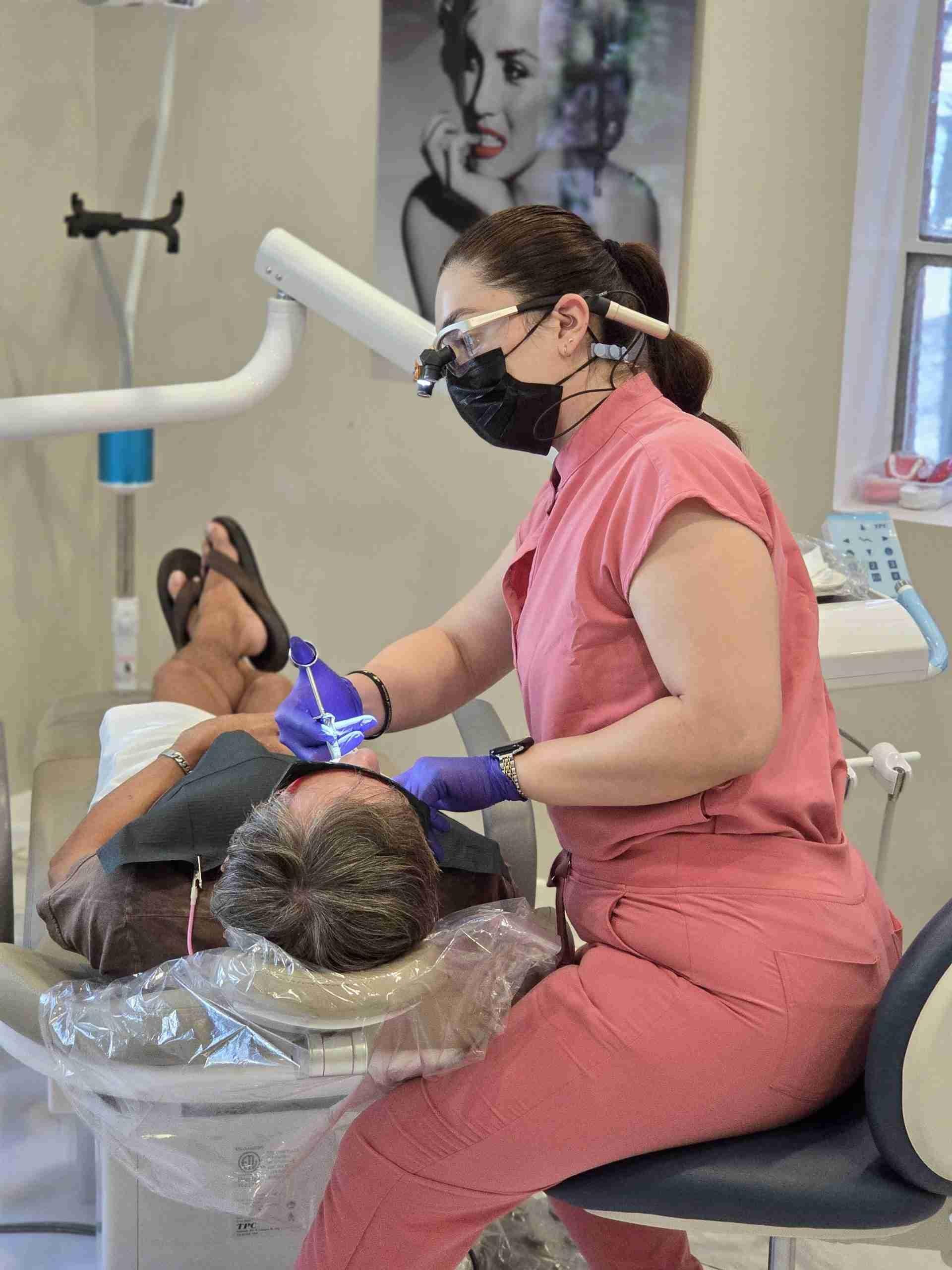
Carried out under local anaesthetic, with sedation available. Healthy tissue is positioned over the exposed root and secured with fine sutures so it stays in close contact while it integrates. You are given written aftercare, and a review appointment follows to check the graft is taking as expected.
Health Benefits of Gum Grafting
Grafting is often assumed to be cosmetic. Most of what it achieves is protective.

Protects Tooth Roots
Root surfaces have no enamel covering them, so they decay more readily and wear faster than the crown of the tooth. Covering them with healthy tissue restores that protection.

Prevents Further Recession
Recession tends to continue once it starts, and a thin band of remaining tissue is more vulnerable than a thick one. Grafting rebuilds a stable band that holds its position.

Reduces Sensitivity
Exposed dentine on the root connects directly to the nerve, which is why recession so often causes sharp sensitivity to cold. Most patients notice a clear improvement once the graft has healed.

Improves Appearance
Teeth that look progressively longer, or one tooth noticeably longer than its neighbours, is the change most patients first notice. Grafting restores a more even gum line as a consequence of the protective work.
Protects Tooth Roots
Root surfaces have no enamel covering them, so they decay more readily and wear faster than the crown of the tooth. Covering them with healthy tissue restores that protection.
Prevents Further Recession
Recession tends to continue once it starts, and a thin band of remaining tissue is more vulnerable than a thick one. Grafting rebuilds a stable band that holds its position.
Reduces Sensitivity
Exposed dentine on the root connects directly to the nerve, which is why recession so often causes sharp sensitivity to cold. Most patients notice a clear improvement once the graft has healed.
Improves Appearance
Teeth that look progressively longer, or one tooth noticeably longer than its neighbours, is the change most patients first notice. Grafting restores a more even gum line as a consequence of the protective work.
Why Patients Choose Us for Gum Grafting
More than thirty years of restorative and periodontal practice, with the cause of your recession assessed rather than just the recession itself. Where aggressive brushing, grinding or untreated gum disease is driving it, that is addressed alongside the graft, because a graft placed over an unresolved cause will recede again. You receive a written plan covering the technique, the recovery and the cost before treatment begins. Book an assessment with Dr. Shir.
Frequently Asked Questions About Gum Graft Surgery
The questions patients ask most often before treatment.
What is gum graft surgery?
A periodontal procedure that restores receded gum tissue by placing healthy tissue over exposed tooth roots. It protects the root surface, which has no enamel and is therefore more prone to decay and sensitivity, stops the recession progressing, and restores a more even gum line.
Is gum graft surgery painful?
The area is thoroughly anaesthetised, so the procedure itself is comfortable, and sedation is available. Afterwards, expect soreness for several days, and where tissue was taken from the palate that site is often the more tender of the two. Over-the-counter pain relief manages this for most patients, and you receive written aftercare covering the whole period.
How long does it take to recover from a gum graft?
Most patients are comfortable within one to two weeks, with a soft diet and careful cleaning around the site during that period. The graft continues to integrate and mature over several weeks after that. Avoid brushing directly over the graft until we tell you it is safe, since disturbing it early is the main thing that compromises the result.
Is gum graft surgery covered by insurance?
Where it is done to treat recession and protect the tooth, it is usually treated as necessary and most plans contribute, though the level varies. Where it is done purely to improve appearance, it is generally classed as cosmetic. You receive a written figure before treatment begins, and financing is available.