

Tooth Extractions in Beverly Hills
Tooth Extractions
Removal planned in 3D, carried out gently, and finished with site preservation so your options for replacement stay open. Dr. Shir will also tell you when a tooth others have written off can still be saved.
The Last Option, Done Properly
In a practice built on preserving natural tooth structure, extraction is genuinely the last resort. We will tell you plainly when a tooth is restorable and when it is not. Where removal is the right answer, two things separate a well-managed extraction from a routine one. The first is planning: a cone beam CT scan shows root shape, how close the roots sit to the sinus or the nerve canal, and how dense the surrounding bone is. Surprises are what turn straightforward extractions into difficult ones. The second is what happens to the socket afterwards, because bone begins resorbing as soon as the root leaves it.
Our Comprehensive Tooth Extraction Services
The types of extraction we carry out, and the situations that call for one.
Simple Tooth Extractions
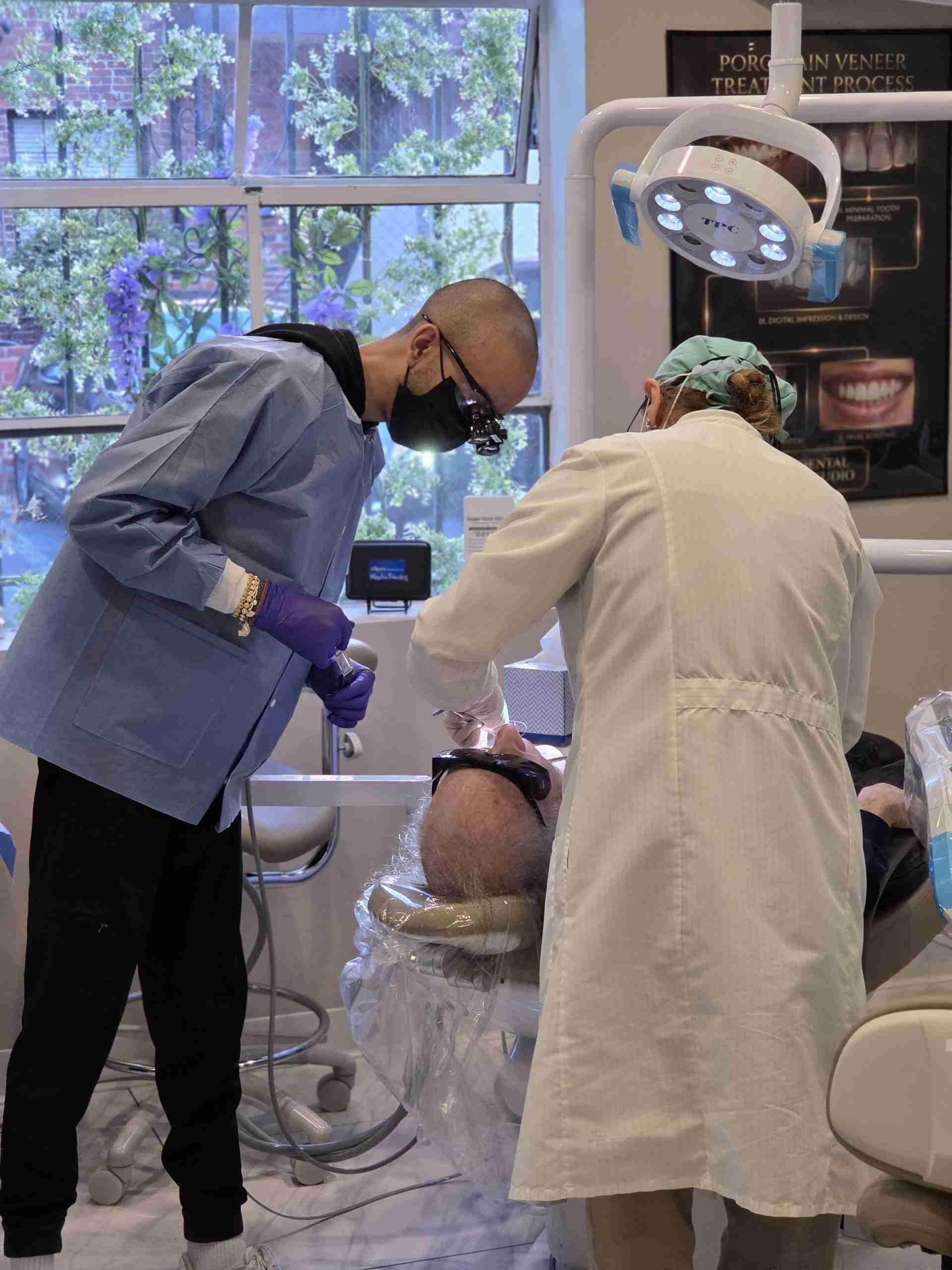
For a tooth fully visible above the gum with accessible root anatomy. After thorough anaesthesia the tooth is gently loosened within its socket and removed. A short appointment, and most patients are comfortable afterwards on over-the-counter pain relief.
Surgical Tooth Extractions
For teeth broken at or below the gum line, roots that are curved or fused to bone, and any case where access requires a small incision. The tooth may be sectioned into pieces to remove it without stressing the surrounding bone, which sounds more involved and is actually gentler on the site.
Emergency Tooth Extractions
Where a tooth is causing severe pain or there is active infection with swelling, we will see you promptly. In some cases the right immediate step is draining and settling the infection first, then removing the tooth once the tissue is calmer, and that decision is made on the day.
Severe Tooth Pain
Persistent, throbbing pain usually indicates the nerve tissue inside the tooth is involved. That does not automatically mean extraction. Root canal treatment saves many of these teeth, and we will assess whether yours is restorable before recommending removal.
Decay or Infection
Decay that has consumed most of the crown and extends deep beneath the gum leaves nothing to build on. Where a root canal and crown could still save the tooth, that is what we recommend. Where it cannot, keeping the tooth simply maintains a source of infection.
Swelling or Abscess
A tender swelling beside a tooth, or a bump on the gum that discharges and returns, indicates infection draining through the bone. This needs prompt attention. Antibiotics may settle the surrounding tissue temporarily but do not address the source.
Loose Teeth
When periodontal disease has destroyed the bone supporting a tooth to the point that it moves noticeably, the foundation is gone. Removing it also protects the bone around its neighbours, which the ongoing infection continues to attack.
Overcrowding
Occasionally a tooth is removed to create the space an alignment plan requires. This is planned jointly with the orthodontic treatment and only where the result genuinely depends on it.
Broken or Cracked Teeth
A fracture extending beneath the gum into the root leaves no sound structure for a crown to hold and no way to seal the tooth against bacteria. These teeth are not restorable regardless of how they look above the gum, and the scan usually confirms the extent quickly.
WHAT HAPPENS TO THE SOCKET
Bone begins resorbing as soon as a root is removed, and the greatest loss happens in the first few months. Where an implant is planned or possible later, grafting the socket at the time of extraction maintains the bone volume and the gum contour that implant will depend on. This is the step most commonly skipped elsewhere, and it is the one that decides how straightforward, and how natural-looking, the eventual replacement will be. The socket is also treated with ozone to reduce bacteria, which supports clean healing.
WHY PATIENTS CHOOSE US FOR TOOTH EXTRACTIONS
An extraction is the beginning of the next stage, and it is planned that way here.

30+ Years of Experience
More than three decades of restorative and surgical practice. Dr. Shir will tell you honestly whether a tooth can be saved before recommending removal, and a meaningful number of teeth condemned elsewhere turn out to be restorable.

Comfort-First Approach
Thorough anaesthesia, unhurried appointment time reserved for you, and sedation available where anxiety is a factor. Most patients report the anticipation was harder than the appointment itself.

State-of-the-Art Technology
Cone beam CT imaging shows root anatomy, nerve position and sinus proximity before we begin, so the procedure holds no surprises. Ozone is used in the socket afterwards to support clean healing.

Replacement Planned Here
Implants, bridges and partials are all provided in this office, so the removal is sequenced into a complete plan rather than leaving you with a gap and a referral.
30+ Years of Experience
More than three decades of restorative and surgical practice. Dr. Shir will tell you honestly whether a tooth can be saved before recommending removal, and a meaningful number of teeth condemned elsewhere turn out to be restorable.
Comfort-First Approach
Thorough anaesthesia, unhurried appointment time reserved for you, and sedation available where anxiety is a factor. Most patients report the anticipation was harder than the appointment itself.
State-of-the-Art Technology
Cone beam CT imaging shows root anatomy, nerve position and sinus proximity before we begin, so the procedure holds no surprises. Ozone is used in the socket afterwards to support clean healing.
Replacement Planned Here
Implants, bridges and partials are all provided in this office, so the removal is sequenced into a complete plan rather than leaving you with a gap and a referral.
GET A SECOND OPINION BEFORE YOU LOSE THE TOOTH
Not every tooth recommended for extraction actually needs to come out, and we say so when we see it. If you have been told a tooth must go, an assessment with a 3D scan will tell you where you really stand. If removal is the right answer, it will be planned properly with what comes afterwards in mind. Book an appointment with Dr. Shir.
Frequently Asked Questions About Tooth Extractions
The questions patients ask most often before and after removal.
Is getting a tooth extraction painful?
The tooth and surrounding tissue are thoroughly anaesthetised, so during the procedure you feel firm pressure and movement rather than pain. Sedation is available where anxiety makes the appointment difficult. Afterwards, expect soreness for two to three days, which over-the-counter pain relief manages for most patients. Pain that increases sharply around day three rather than fading is worth calling us about.
How long does it take to recover from a tooth extraction?
The gum tissue closes over the socket within one to two weeks, and most patients feel essentially normal within a week. The bone underneath continues filling and remodelling for three to six months, which is why implant timing is planned around that process rather than around how you feel.
What should I do after a tooth is extracted?
Soft, cool foods for the first day or two, chewing on the opposite side, and nothing requiring suction. Avoid smoking, drinking through a straw, vigorous rinsing and spitting for the first few days, since these dislodge the clot protecting the healing bone and cause a painful dry socket. You will receive written aftercare instructions covering the full timeline.
Are tooth extractions covered by insurance?
Extractions are usually treated as necessary rather than elective, so most plans contribute, though coverage varies and grafting is sometimes treated separately. You receive a written figure before treatment, and where the extraction is part of a larger plan involving replacement, the whole sequence is quoted together.