
No-Drill Cavity Care in Beverly Hills
Preventive Dentistry
Early tooth decay can often be stopped before it becomes a cavity, with no drilling. We use Curodont Repair, a liquid applied to early white-spot lesions that helps weakened enamel take minerals back in. Once enamel is lost, your body cannot replace it, so the aim is to find decay early and stop it there.
What No-Drill Cavity Care Can and Cannot Do
Tooth decay is a tug of war. Acid made by the bacteria in plaque pulls minerals out of enamel, and saliva and fluoride put them back. When minerals are lost faster than they return, a chalky white spot can appear. At that stage, decay can be stopped or reversed. Once it breaks through the surface and forms a cavity, the damage stays, and a dentist has to repair it with a filling (NIDCR).
That is why we never promise new enamel: once it is lost, your body cannot replace it (Cleveland Clinic). What Curodont aims to do is help an early lesion take minerals back in and stop it from getting bigger, so the tooth does not need drilling.
How Curodont Works
Curodont Repair is made by vVARDIS. Its active ingredient is a self-assembling peptide called P11-4.
What It Is
A liquid applied to an early white-spot lesion. The peptide forms a framework inside the weakened enamel that minerals from saliva can build on.
How It Is Applied
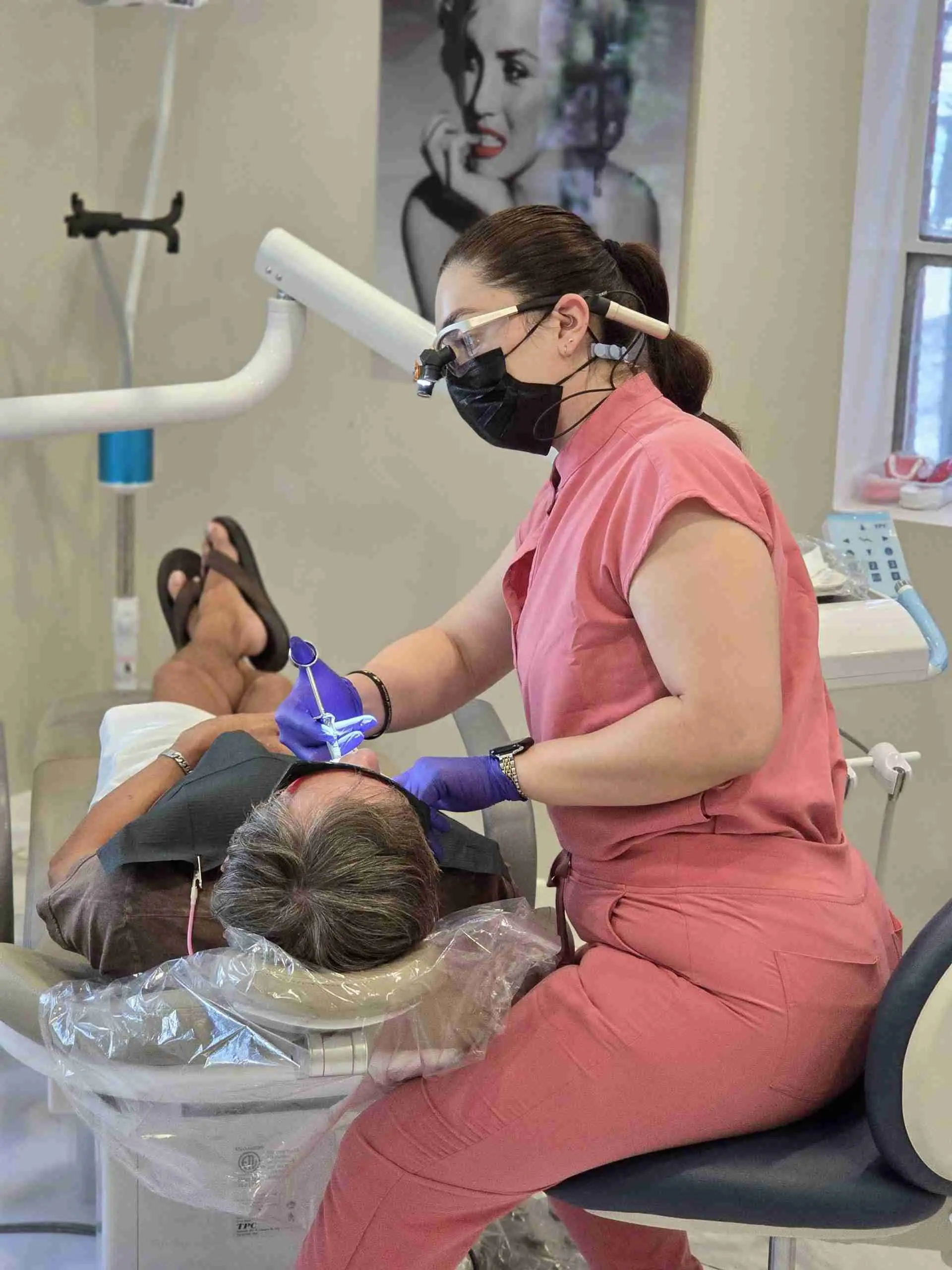
The tooth is cleaned and the liquid is applied to each early lesion, in the chair, with no drilling.
What the Research Shows
A 2023 review of six clinical trials of Curodont Repair found it likely helps stop early lesions and makes them smaller, and none of the trials reported unwanted changes in how the treated teeth looked. The trials had weaknesses, and the authors call for longer studies (Keeper and colleagues, 2023).
What It Does Not Do
It does not replace lost enamel, and it does not fix a cavity that has already broken through the surface. A cavity needs a filling.
Checking Progress
No-drill care is not a one-time fix. We record each lesion and recheck it at your visits with an exam and, when needed, digital X-rays. If a lesion keeps growing, a small filling is the right treatment.
Who It Is For
No-drill care works when decay is found early, which is one more reason regular checkups matter.
A GOOD FIT:
Adults, including patients with dental implants, who have early white-spot lesions on their natural teeth that have not broken through the enamel.
WHEN A FILLING IS STILL NEEDED:
When decay has made a hole in the tooth, reaches deep inside it, or keeps growing after Curodont. Then a filling protects the tooth, and we keep it as small as the tooth allows.
How No-Drill Cavity Care Works
Treatment is done in the chair, with no drilling.

Find Lesions Early
An exam, and X-rays when needed, show where enamel has lost minerals and how deep the lesion goes.

Look at the Cause
We go through what drives your decay: sugary snacks and drinks, dry mouth, brushing and flossing, and how much fluoride you get.

Apply Curodont
The tooth is cleaned and Curodont is applied to each early lesion, with no drilling.

Recheck
We check the lesions at your next visits and tell you honestly what we see.
Find Lesions Early
An exam, and X-rays when needed, show where enamel has lost minerals and how deep the lesion goes.
Look at the Cause
We go through what drives your decay: sugary snacks and drinks, dry mouth, brushing and flossing, and how much fluoride you get.
Apply Curodont
The tooth is cleaned and Curodont is applied to each early lesion, with no drilling.
Recheck
We check the lesions at your next visits and tell you honestly what we see.
Catch Decay While It Can Still Be Stopped
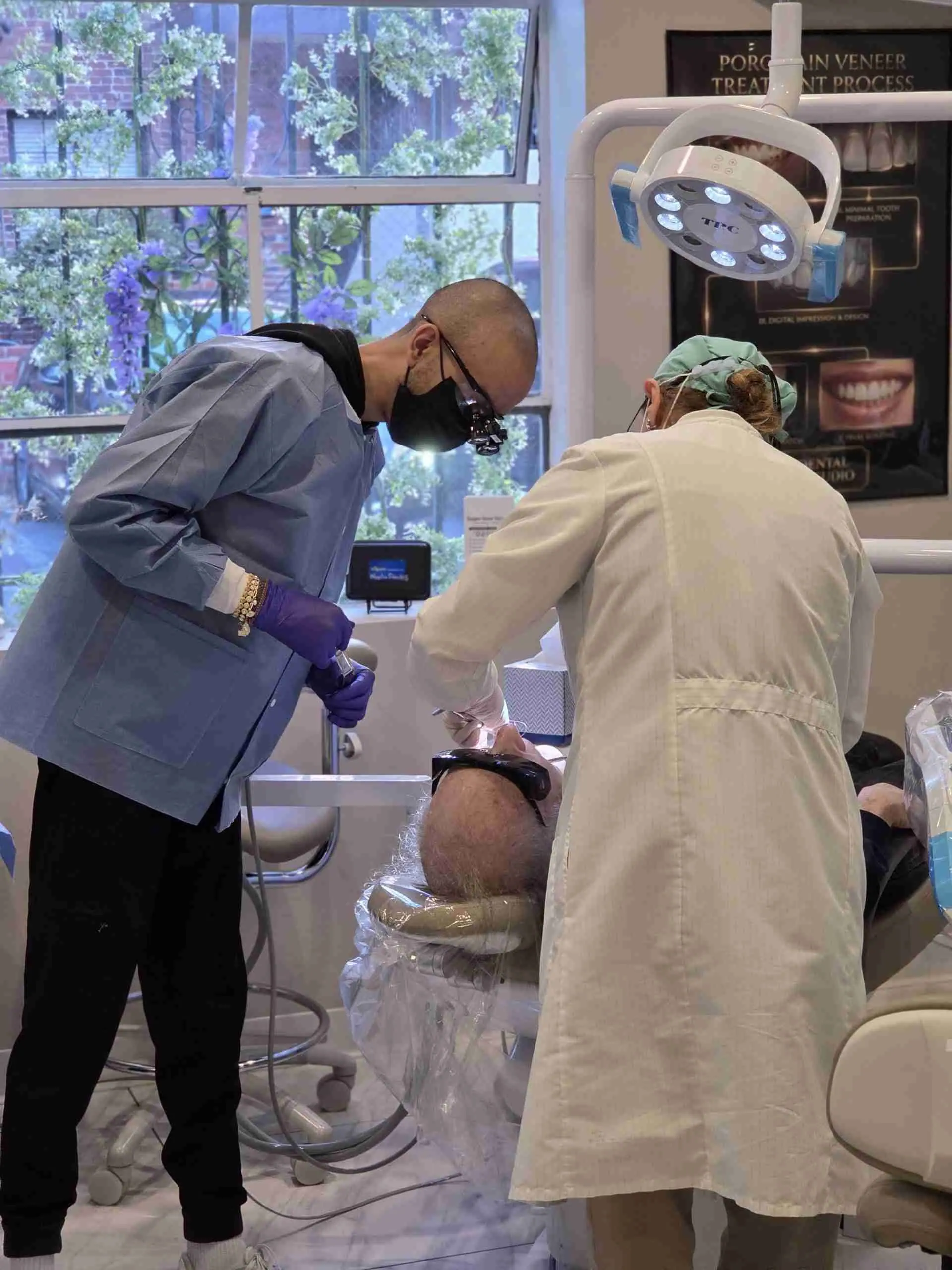
If you have white spots on your teeth, or were told a tooth is one to watch, book a visit with Dr. Shir. We will show you what we see and go through your no-drill and filling options with you.
Frequently Asked Questions About No-Drill Cavity Care
The questions patients ask most often, answered plainly.
Can lost tooth enamel come back?
No. Once enamel is lost, your body cannot replace it (Cleveland Clinic). Weakened enamel in an early lesion can take minerals back in from saliva and fluoride, which can stop or reverse early decay (NIDCR). That is what Curodont aims to help with.
What is Curodont?
Curodont Repair is a liquid made by vVARDIS. Its active ingredient, a self-assembling peptide called P11-4, forms a framework inside weakened enamel that minerals from saliva can build on. It is applied to early lesions, with no drilling.
How well does it work?
A 2023 review of six clinical trials found it likely helps stop early lesions and makes them smaller. The trials had weaknesses, the results looked at up to two years, and the authors call for longer studies, so we recheck every treated lesion at your visits (Keeper and colleagues, 2023).
Does this mean I will not need a filling?
Not always. Curodont is for early lesions. A cavity that has broken through the surface is lasting damage, and a filling is how a dentist repairs it (NIDCR). We tell you which one you need and why.