

Dental Sealants in Beverly Hills
Preventive Dentistry
A thin protective coating bonded into the deep grooves of back teeth, where a toothbrush bristle physically cannot reach. Quick to place, no drilling, no anaesthetic.
What Are Dental Sealants & How Do They Help?
The chewing surfaces of back teeth are not flat. They carry deep, narrow grooves that a toothbrush bristle is simply too wide to enter, which is why the majority of cavities in children and teenagers form there rather than anywhere else. A sealant is a thin resin coating painted into those grooves and hardened with a curing light, creating a smooth surface that food and bacteria cannot settle into. Applying one takes a few minutes per tooth, involves no drilling and no anaesthetic, and it is among the most cost-effective preventive treatments in dentistry.
SEALANTS: WHAT THEY DO AND WHO NEEDS THEM
What sealants protect against, who benefits most, and what to expect from them over time.
Protect Against Cavities
Sealants create a physical barrier over the grooves where decay most often starts. The research consistently shows a meaningful reduction in cavities on sealed molars compared with unsealed ones, and the protection is greatest in the first few years after placement.
Save Time and Money
Placing a sealant costs a fraction of what filling the same tooth costs later, and it takes a few minutes rather than a full appointment with anaesthetic. For a child with deep grooves, the arithmetic is straightforward.
Preserve Natural Teeth
A sealed tooth that never develops decay keeps all of its original structure. A tooth that gets a filling never returns to being untouched, and once a filling is placed it will eventually need replacing, usually larger each time.
Quick, Comfortable Application
The tooth is cleaned, prepared with a conditioning gel, and the sealant is painted on and hardened with a light. No drilling and no injection, which makes it a good first experience for an anxious child.
Long-Lasting Results
Sealants commonly last several years, though they wear and can chip under chewing forces. We check them at every routine visit and repair or replace them where needed, which is what keeps the protection continuous.
Best Placed Soon After Molars Arrive
Permanent molars come through around ages six and twelve. Sealing them shortly after they arrive, before decay has a chance to start in the grooves, is when they do the most good.
Useful for Adults Too
Sealants are usually associated with children, but adults with deep unrestored grooves and a history of decay benefit as well. If your molars have never been filled and the grooves are deep, they are worth considering.
Sealants Do Not Replace Brushing
They protect the chewing surfaces only. Decay between teeth and at the gum line is unaffected, so daily brushing, cleaning between the teeth and regular checkups all still matter exactly as much.
BPA-Free Materials
We use sealant materials selected to avoid BPA, in keeping with the metal-free and biologically conservative approach we take throughout the practice.
Our Sealant Process: What to Expect
A short, straightforward appointment with no drilling, no anaesthetic and nothing uncomfortable.
CLEANING & PREPARING
The tooth is thoroughly cleaned so the sealant bonds to clean enamel rather than sealing anything in, then dried and treated with a conditioning gel that gives the surface texture for the resin to grip. The gel is rinsed away and the tooth dried again. Keeping the surface dry through this stage is what determines how well the sealant holds.
APPLYING & HARDENING
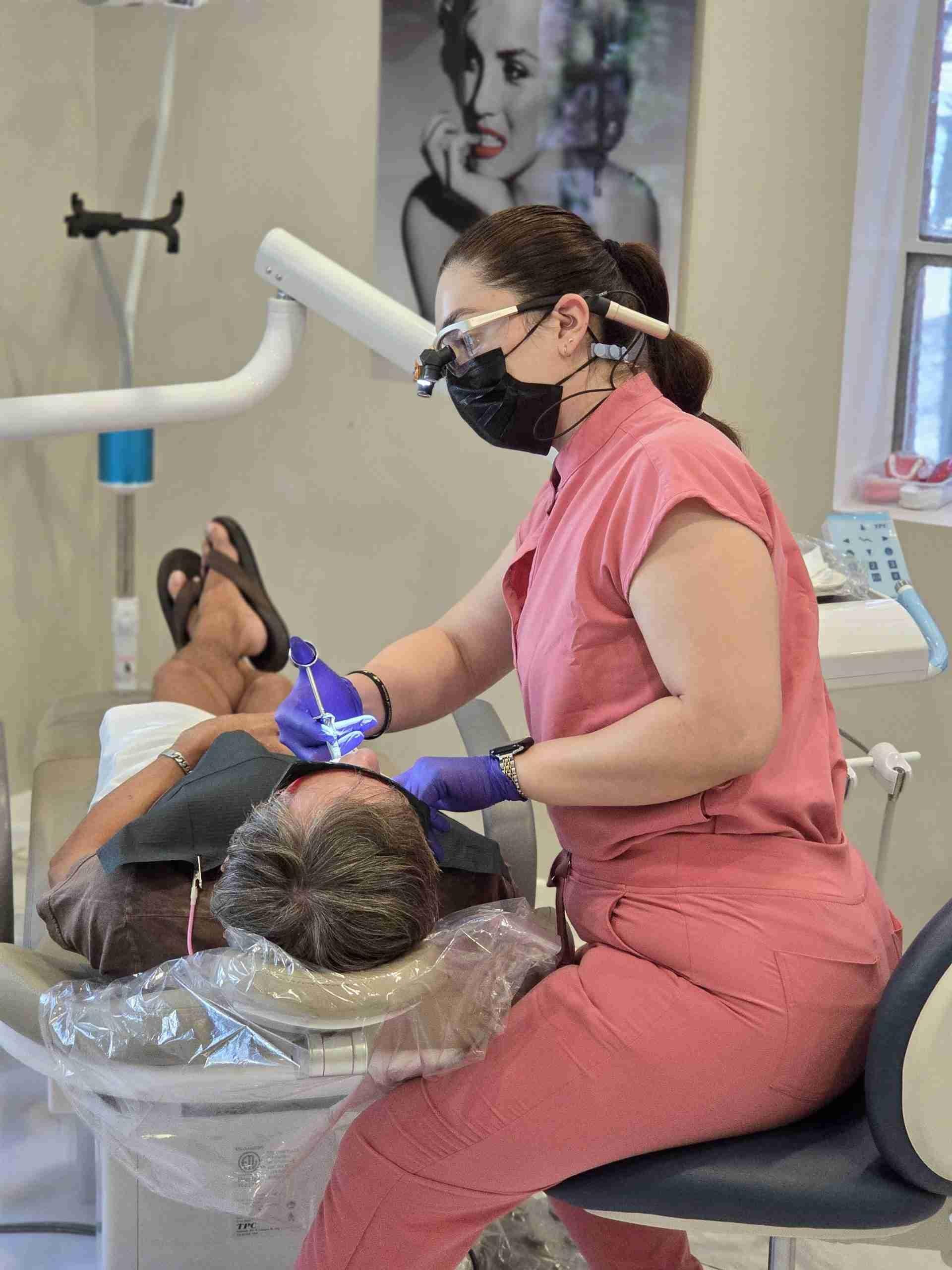
The sealant is painted into the grooves and hardened with a curing light in a few seconds. Your bite is checked so the sealant is not sitting high, and it is adjusted if needed. You can eat straight away, and there is nothing to avoid afterwards.
WHY PATIENTS CHOOSE US FOR DENTAL SEALANTS
Sealants are a simple treatment where the technique and the timing matter more than anything else.

30+ Years of Experience
More than three decades of practice. Grooves are assessed properly before sealing, because a sealant placed over undetected early decay traps the problem underneath.

BPA-Free Materials
Sealant materials selected to avoid BPA, consistent with the metal-free and conservative approach we take across the practice.

Checked at Every Visit
Sealants wear and chip over time. We inspect them at every routine appointment and repair or replace them, which is what keeps the protection continuous.

Comprehensive Preventive Care
Sealants are one part of a broader preventive approach that includes examinations, cleanings, fluoride where useful, and digital imaging that finds decay early.
30+ Years of Experience
More than three decades of practice. Grooves are assessed properly before sealing, because a sealant placed over undetected early decay traps the problem underneath.
BPA-Free Materials
Sealant materials selected to avoid BPA, consistent with the metal-free and conservative approach we take across the practice.
Checked at Every Visit
Sealants wear and chip over time. We inspect them at every routine appointment and repair or replace them, which is what keeps the protection continuous.
Comprehensive Preventive Care
Sealants are one part of a broader preventive approach that includes examinations, cleanings, fluoride where useful, and digital imaging that finds decay early.
Who's a Good Candidate for Dental Sealants?
Children and teenagers with newly erupted permanent molars benefit most, ideally sealed soon after those teeth come through. Adults with deep unrestored grooves and a history of decay are also good candidates. The one situation where a sealant is not appropriate is a tooth that already has decay in the grooves, which needs treating rather than covering. An examination will tell you which applies. Book with Dr. Shir.
Frequently Asked Questions About Dental Sealants
The questions patients and parents ask most often.
What are dental sealants?
Thin protective coatings painted onto the chewing surfaces of back teeth, where the majority of cavities form. They fill the deep narrow grooves that a toothbrush bristle is too wide to enter, creating a smooth surface that food and bacteria cannot settle into. Applying one takes a few minutes and needs no drilling or anaesthetic.
Are dental sealants only for kids?
Children and teenagers benefit most, because sealing molars soon after they come through prevents decay from ever starting in those grooves. But adults with deep unrestored grooves and a history of cavities benefit too. If your back teeth have never been filled and the grooves are deep, sealants are worth discussing.
How long do dental sealants last?
Commonly several years, though they wear and can chip under normal chewing forces. We check them at every routine visit and repair or replace them as needed, which is what keeps the protection continuous. Sealants that are allowed to wear away unnoticed leave the tooth as exposed as it was originally.
Are dental sealants covered by insurance?
Most plans cover sealants for children on permanent molars, often fully, though age limits and tooth restrictions usually apply. Coverage for adults is less consistent. You receive a written figure before treatment, and the cost of a sealant is a small fraction of what filling the same tooth would cost later.