
Biofilm Therapy in Beverly Hills
Preventive Dentistry
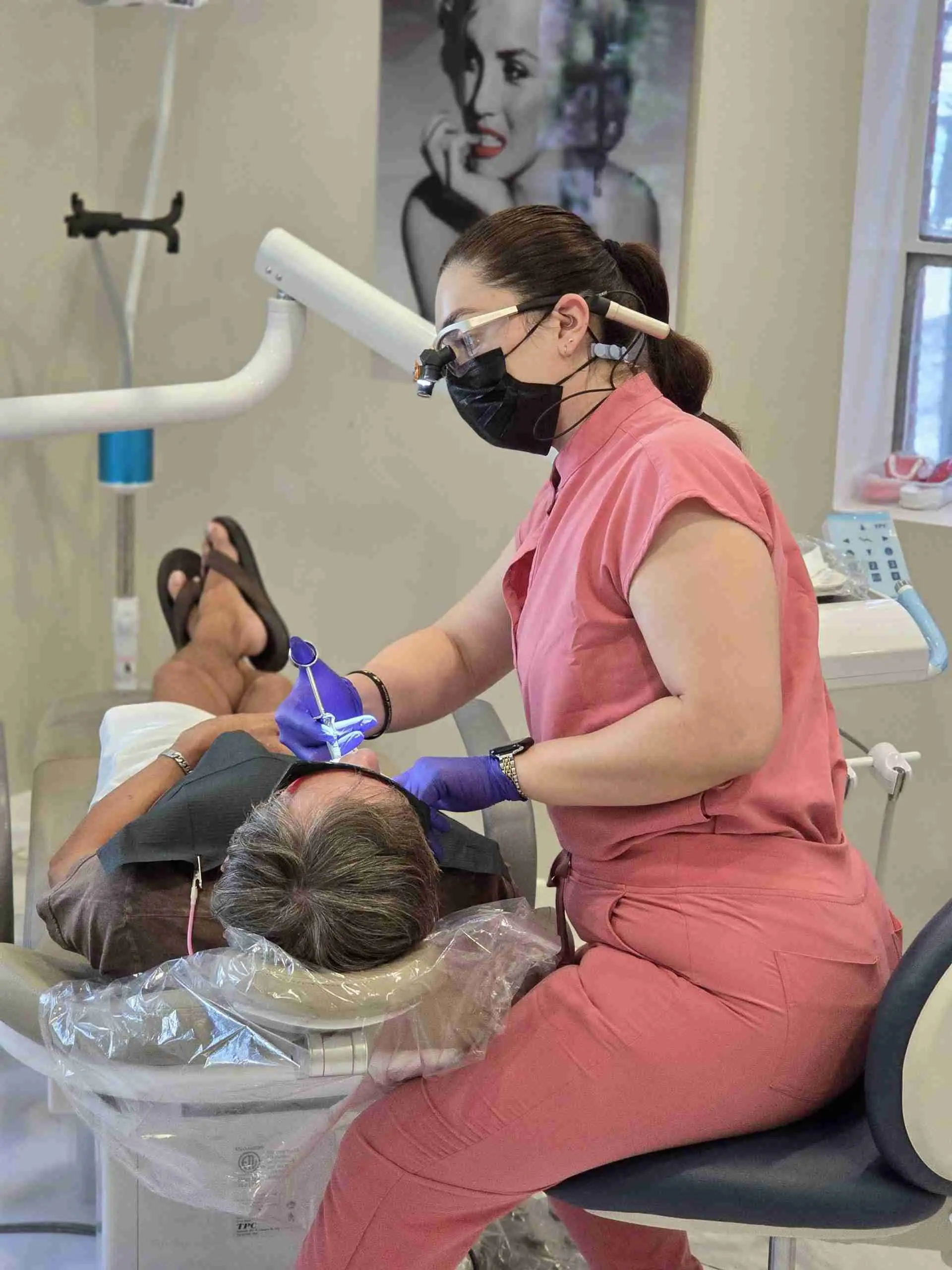
Plaque is a biofilm: a sticky film of bacteria on your teeth and gums. We use Guided Biofilm Therapy with the EMS AIRFLOW system: a disclosing dye shows the biofilm, then air polishing, and ultrasonic instruments where needed, remove it, to help keep your teeth and gums healthy.
What Biofilm Therapy Is
Plaque is a sticky film of bacteria, and the bacteria in plaque and tartar can trigger the inflammation that damages the gums (NIDCR). Guided Biofilm Therapy is a way of doing the professional cleaning that removes them.
First, a disclosing solution colors the biofilm so it shows up. Most of it is then removed with EMS AIRFLOW air polishing, a fine spray of water, air and a very fine powder. Ultrasonic instruments remove any hard tartar that remains. In a small randomized trial, a cleaning guided by the disclosing dye left about half as much plaque at the gumline as the same cleaning without it, and less still on the rest of the tooth (Mensi and colleagues, 2020).
What Happens During Biofilm Therapy
A typical visit, step by step. Each step has a purpose, and you can see the difference in the mirror.
Your Gums and Health History
We start with your medical history, an exam and gum measurements, so we know whether a regular cleaning is enough or you need treatment for gum disease.
Coloring the Biofilm
A disclosing solution stains plaque so it can be seen. We show you where it builds up, which also shows where to focus when you brush and floss at home.
EMS AIRFLOW Air Polishing
A fine spray of water, air and a very fine powder lifts the colored biofilm off the teeth and along the gumline, including around fillings, crowns and implants.
Removing Tartar Where Needed
Air polishing removes soft biofilm, not hardened tartar. Where tartar remains, it is removed with ultrasonic instruments.
A Final Check
We look again for any colored areas left behind, then go through your home care and agree when you should come back.
Around Dental Implants
Implants need regular professional cleaning too, because the gum and bone around them can become inflamed. Air-polishing powders are one of the tools studied for cleaning below the gumline, including around implants (Gheorghe and colleagues, 2023).
Supplements Dr. Shir May Recommend
As part of your care, Dr. Shir may recommend probiotics, omega-3 fatty acids or a resolvin-based supplement. Research on supplements for gum health is still developing: current European guidelines for treating gum disease advise against adding probiotics or omega-3 supplements to deep cleaning, because studies have not shown a clear benefit (EFP guideline, 2020), and studies of resolvins for gum disease have so far been done in animals, with the resolvins put directly on the gums, so studies in people are still needed (Osorio Parra and colleagues, 2019).
What the Research Shows
A 2026 review of five studies comparing Guided Biofilm Therapy with standard scaling found that patients reported less pain and the treatment took less time, but the effect on gum measurements such as bleeding and pocket depth was mixed. The authors concluded that the evidence does not show it is clinically better than standard cleaning (Yein and colleagues, 2026).
What It Does Not Replace
Biofilm therapy does not replace brushing and flossing every day, and on its own it is not a treatment for advanced gum disease. If you have deep gum pockets or bone loss, you may need deep cleanings or other gum disease treatment.
Your Gums and the Rest of Your Body
Gum health and general health are linked. Here is what the research does and does not show.
WHAT THE RESEARCH SHOWS:
Diabetes is a risk factor for gum disease, and gum disease has also been linked with heart and blood vessel disease (NIDCR). The American Heart Association found that studies support a link between gum disease and heart and blood vessel disease, but do not show that gum disease causes it, or that treating gum disease prevents it (AHA, 2012).
WHAT IT MEANS FOR YOU:
In people with both diabetes and gum disease, a Cochrane review found that treating the gum disease with deep cleaning improved blood sugar control over the following months (Simpson and colleagues, 2022). Healthy gums are worth having for their own sake, but biofilm therapy is not a treatment for heart disease or diabetes, and your doctor's care stays just as important.
Our Approach to Biofilm Therapy
For adults and implant patients. A cleaning you can see, explained as we go.

You See What We See
The disclosing dye shows exactly where plaque collects, so our home care advice fits your mouth.

Comfort Matters
In studies, patients reported less pain with this method than with standard scaling. Tell us if anything feels sensitive and we will adjust.

Its Own Visit, or With Treatment
Biofilm therapy is usually its own appointment, but it can also be done at your treatment appointment.

Visits That Fit Your Gums
How often you come back depends on the health of your gums, and we set it with you.
You See What We See
The disclosing dye shows exactly where plaque collects, so our home care advice fits your mouth.
Comfort Matters
In studies, patients reported less pain with this method than with standard scaling. Tell us if anything feels sensitive and we will adjust.
Its Own Visit, or With Treatment
Biofilm therapy is usually its own appointment, but it can also be done at your treatment appointment.
Visits That Fit Your Gums
How often you come back depends on the health of your gums, and we set it with you.
Start With a Clean, Healthy Mouth
If your gums bleed when you brush, you have implants to keep clean, or you are due for a cleaning, ask about biofilm therapy when you book with Dr. Shir's team. Bleeding gums can be an early sign of gum disease, and it is easier to treat when caught early.
Frequently Asked Questions About Biofilm Therapy
The questions patients ask most often, answered plainly.
Is biofilm therapy the same as a regular cleaning?
It does the same job, removing plaque and tartar, in a different order and with different tools: a disclosing dye first, then EMS AIRFLOW air polishing, then ultrasonic instruments for tartar where needed. Studies in people with gum disease that compared it with standard scaling found less pain and shorter visits, but not clearly better gum results (Yein and colleagues, 2026).
Is it a separate appointment?
Usually, yes. It can also be done at the time of your treatment appointment.
Do I need to take supplements?
Not necessarily. Dr. Shir may recommend probiotics, omega-3 fatty acids or a resolvin-based supplement as part of your care. Research on supplements for gum health is still developing, and current European guidelines for treating gum disease advise against adding probiotics or omega-3 supplements to deep cleaning (EFP guideline, 2020). Ask her what she suggests for you and why.
Can biofilm therapy improve my heart health or diabetes?
We cannot promise that. Gum disease is linked with heart disease, but the research shows a link, not proof that gum disease causes heart disease or that treating it prevents heart disease (AHA, 2012). In people with diabetes and gum disease, treating the gum disease with deep cleaning improved blood sugar control in clinical trials (Simpson and colleagues, 2022). That research was on deep cleaning for gum disease, not on biofilm therapy, so biofilm therapy is not a treatment for diabetes. Your doctor stays in charge of your heart and diabetes care.
Does biofilm therapy hurt?
In studies, patients reported less pain with this method than with standard scaling (Yein and colleagues, 2026). Sensitive teeth or inflamed gums can still feel tender, so tell us and we will adjust or numb the area.