This article is about that timeline: what each stage usually feels like, how long it takes and what you can do to help it go well. For what an implant is and who is a good candidate, see our dental implants page. If you are still deciding between an implant and a bridge, start with bridge or implant: how to choose.
What happens at the first visit?
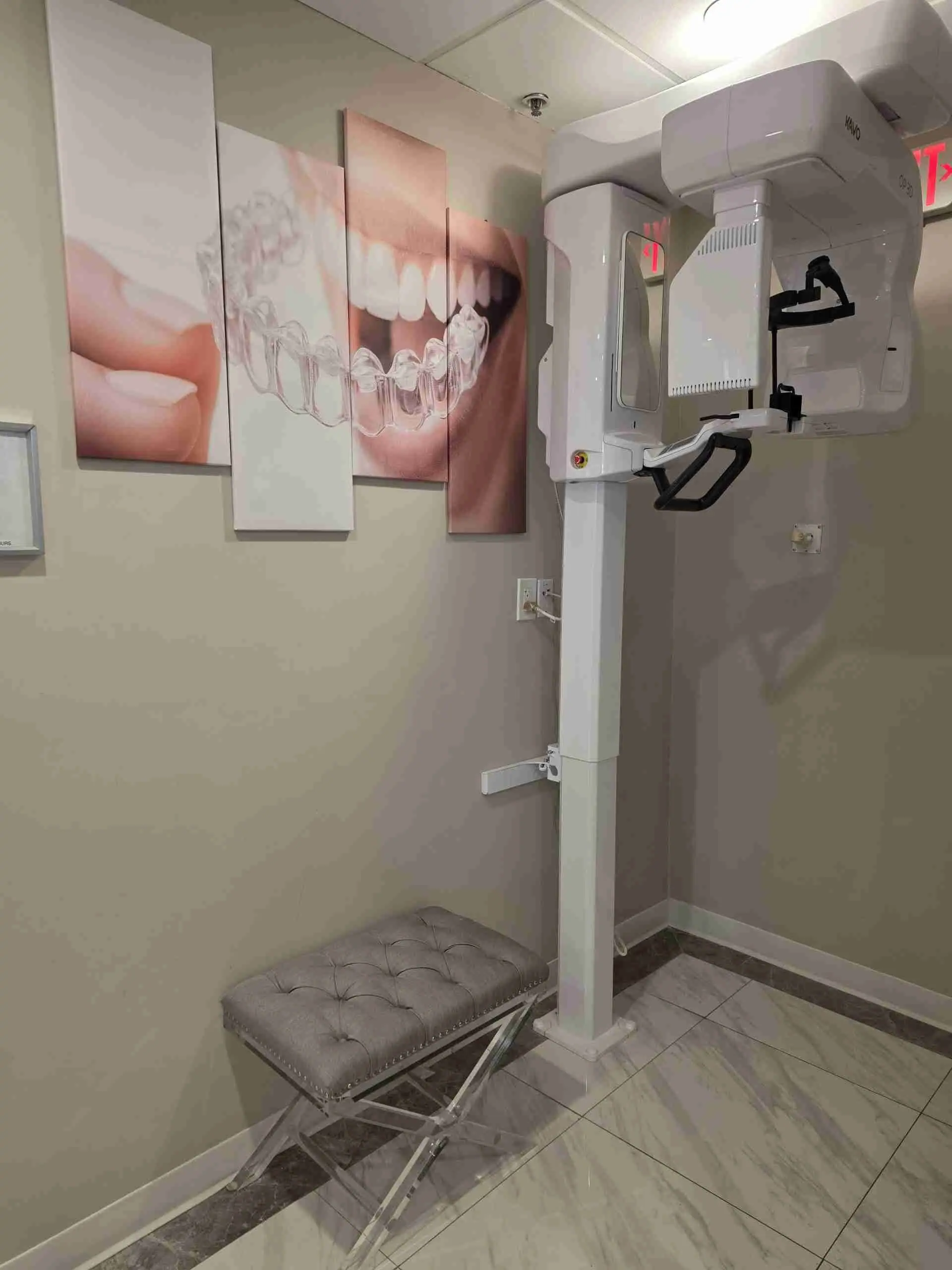
The first appointment is about information, not treatment. We examine your mouth, go through your medical history and every medicine you take, and, if an implant looks like the right choice, take a 3D scan here in the office. A regular X-ray is a flat picture; the scan shows the width and height of your bone and where the nerve and sinuses sit. The American Academy of Oral and Maxillofacial Radiology recommends cross-sectional imaging for implant sites, and a 3D scan is the usual way to get it (AAOMR). You leave with a written plan and a timeline.
If a failing tooth has to come out first, or the bone needs a graft, the plan says so and the timeline gets longer, often by a few months and sometimes more for larger grafts. Some grafts are placed in the same surgery as the implant. That is the main reason two people's timelines differ.
What happens on the day of surgery?
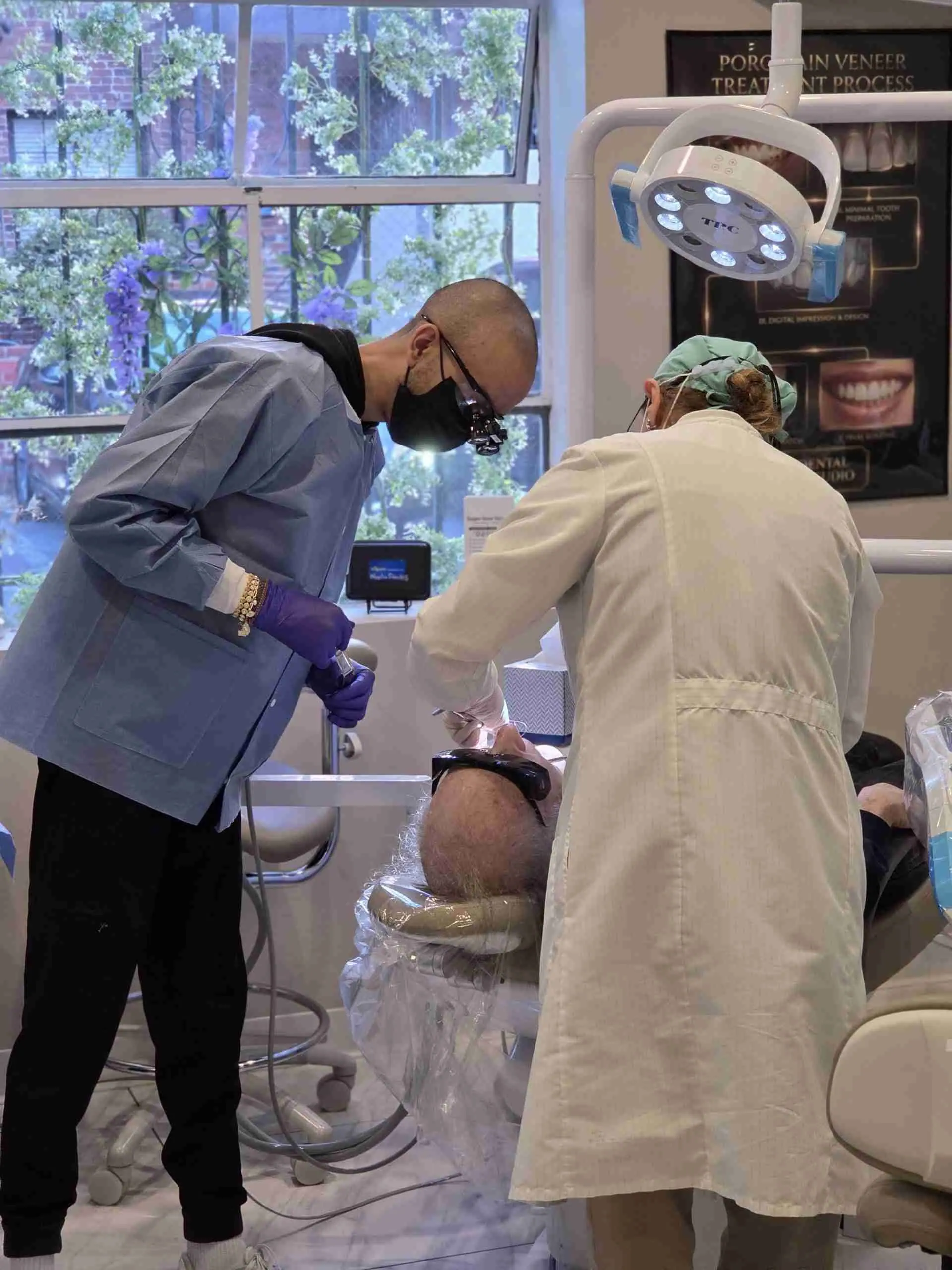
The area is numbed with local anesthetic, and sedation may be an option if you are anxious or several implants are being placed. The gum is opened, a small channel is prepared in the bone, the implant is placed, and the gum is closed with a few stitches. You should feel pressure, not pain; tell us if you feel anything sharp.
What does recovery feel like?
Expect some swelling, soreness and perhaps a little bruising for the first few days, with minor bleeding on the first day. Over-the-counter pain relief is usually enough. Eat soft foods for the first week or two and chew on the other side. Cleveland Clinic says most people feel like themselves within a week or so (Cleveland Clinic). Many go back to work within a few days; plan for longer after a bone graft, several implants or if your job is physical.
Call us the same day if swelling or pain gets worse after the third day instead of better, or if you have a fever, pus or a bad taste, bleeding that does not stop with pressure, numbness or tingling in your lip, chin or tongue that lasts after the anesthetic should have worn off (usually by that evening), or the implant feels loose. If you have trouble breathing or swallowing, or swelling spreads toward your eye or neck, go to the nearest emergency room or call 911.
Smoking slows healing and raises the chance that an implant does not take, and vaping may do the same, so stopping before surgery and through healing helps.
Why does the bone need months to heal?
Over the following months the bone grows onto the implant and locks it in place, a process called osseointegration. It often takes three to six months, longer where a graft was needed or the bone is softer. Chewing hard on the implant before then can make it fail, so this stage is not rushed.
If the gap shows when you smile, a temporary tooth can cover it while you heal. Sometimes a temporary crown can go on the implant the same day, but only when the implant is very firm and your bite and bone allow it, and it is kept out of your bite while you heal. Your dentist will tell you whether yours qualifies.
If you would like to know your own timeline, book a first visit and you will leave with it in writing.
How is the final crown made?
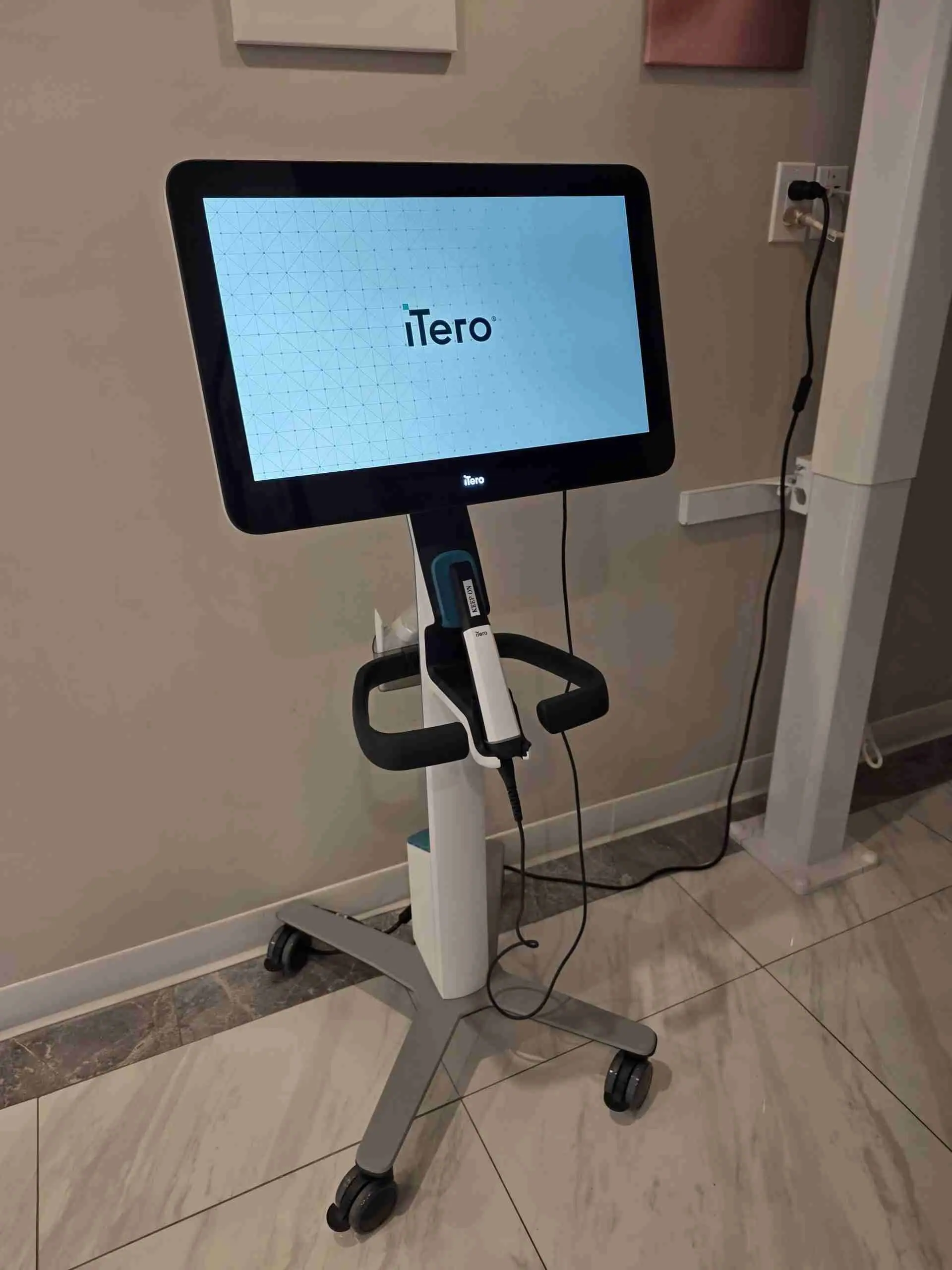
Once the bone is ready, the implant is uncovered if the gum was closed over it (a short, numbed visit), a small connector called an abutment is attached, and the gum heals around it for a couple of weeks. Our digital scanner then records your teeth as a 3D model, with no impression trays, and the crown is shaded to match your other teeth. For one missing tooth that is a single tooth implant; for a whole arch, see full arch implants.
How long does an implant last, and how do I care for it?
With good care, implants last a long time. A 2019 review of 18 studies found about 93 to 96 in 100 implants still in place after 10 years, depending on how people who stopped coming to checkups were counted. The same review found the risk of losing an implant may be up to about twice as high in people 65 and older (Howe and colleagues, 2019). The crown on top is not permanent: in another review, about 9 in 10 implant crowns were still in place after 10 years, and repairs such as a loose screw or chipped porcelain were common (Jung and colleagues, 2012).
The implant itself cannot get a cavity, but the gum and bone around it can become inflamed. In one review, about 4 in 10 people with implants had gum inflammation around an implant, and about 1 in 5 had inflammation with bone loss (Derks and Tomasi, 2015). Caught early, when the gum is red, swollen or bleeds, the inflammation can often be reversed with a professional cleaning and better cleaning at home, though the redness and bleeding can take more than three weeks to settle (Heitz-Mayfield and Salvi, 2018). If it goes on, it can lead to bone loss around the implant, which is harder to treat, so regular checkups with X-rays matter (2017 World Workshop). So the care is the same as for your own teeth: brush twice a day, clean around the implant with floss or small interdental brushes, and keep your checkups. If you grind at night, a night guard can protect the crown.
Questions patients ask about the implant timeline
Can the whole thing be done in one day?
Usually not. In some cases a temporary tooth can go on the same day if the implant is very firm, and it is kept out of your bite. The final crown usually waits for the bone to heal, which often takes three months or more.
When can I go back to work?
Many people go back within a few days. Plan for longer after a bone graft, several implants, or if your job is physical.
What can I eat after implant surgery?
Soft, cool foods for the first few days, then soft foods for a week or two, chewing on the other side. Avoid very hot drinks and anything crunchy over the implant until we say it is ready.
Can I get an implant years after losing the tooth?
Often, yes. The bone shrinks where a tooth is missing, most in the first months, so a graft may be needed, which can add a few months, sometimes more. The 3D scan shows how much bone is there before anything starts.
If you are missing a tooth and want to know what an implant would involve for you, come and see us. The first visit includes the exam and, if an implant is planned, the 3D scan, and you will leave with a clear plan and a timeline. Our office is at 416 N. Bedford Dr. in Beverly Hills, a short drive from Century City and West Hollywood. Request an appointment, or call us.